



Let’s dive into the fascinating world of consciousness by exploring various theories that have emerged over time.
We’ll look at their historical backgrounds, delve into the philosophical ideas behind them, and see how they hold up against scientific scrutiny.
Starting with dualism, which suggests that the mind and body are distinct entities, we can trace its roots back to philosophers like Renée Descartes.
On the other hand, materialism proposes that everything, including consciousness, can be explained through physical processes.
Then we have functionalism, which focuses on the functions of mental states rather than their internal composition.
Emerging theories like integrated information theory and panpsychism are gaining traction, offering fresh perspectives on how consciousness might be woven into the fabric of reality.
Integrated information theory, for example, posits that consciousness corresponds to the level of information integration within a system.
We can’t overlook phenomenology and global workspace theory, either.
These approaches shed light on how attention and perception interact to shape our conscious experience.
It’s fascinating to see how they help us understand the intricate dynamics of awareness in daily life.
As we touch on quantum theories, we start to see potential avenues for rethinking traditional views on consciousness.
These theories challenge our existing frameworks and invite us to consider new possibilities.
Overall, while there are significant differences among these theories, there are also intriguing similarities.
This comparative analysis can spark further discussions about the nature of consciousness and its implications for both science and philosophy.
Table of Contents
Key Takeaways
When we delve into the historical perspectives on consciousness, we uncover a fascinating array of theories that each offer their own unique lens through which to understand awareness and experience.
Starting with dualism, which has its roots in the philosophy of René Descartes, this theory posits a clear distinction between the mind and the body. This raises intriguing questions about identity and agency—essentially, how do our thoughts and feelings relate to our physical existence?
On the other hand, materialism connects consciousness directly to brain function. It emphasizes the importance of neural correlates—essentially, how brain activity corresponds to conscious experience. However, this perspective faces significant challenges when trying to explain the subjective nature of personal experiences, or qualia.
Then we have functionalism, which shifts the focus to the roles of mental states within broader systems. This approach emphasizes the interconnectedness of mental processes and provides a framework that can be particularly useful for understanding various psychological disorders.
In more contemporary discussions, theories like Integrated Information Theory and Global Workspace Theory emerge as modern models for understanding consciousness. These theories highlight the importance of information processing and the way different cognitive processes are interconnected, providing a more dynamic understanding of how consciousness might work.
So, whether you’re looking at the historical roots or the latest theories, the exploration of consciousness is rich and complex, continually inviting us to question and understand the essence of our awareness.
Historical Perspectives on Consciousness
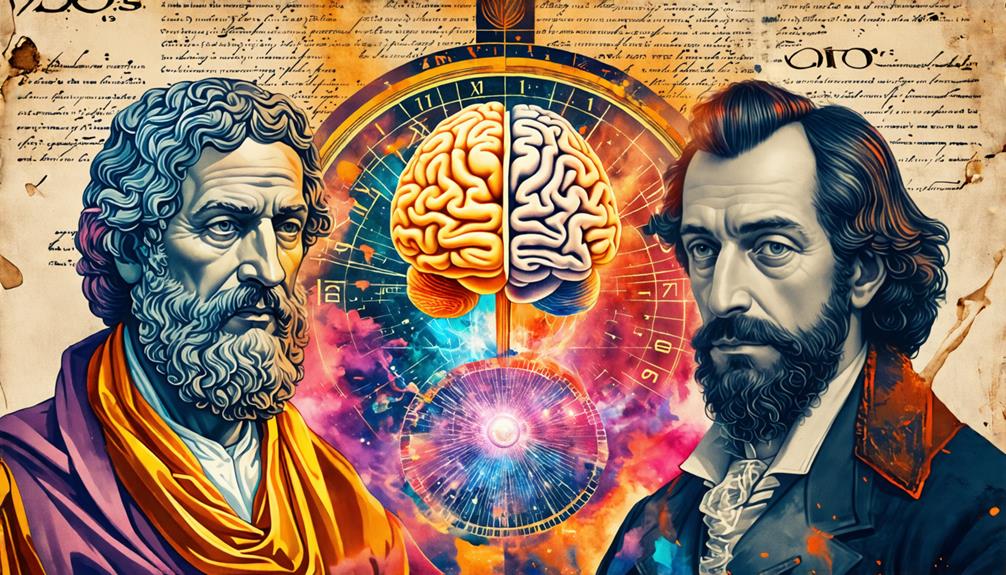
Throughout history, philosophers, scientists, and theologians have explored consciousness, each bringing their own unique insights that have shaped our understanding of this complex phenomenon. Thinkers like René Descartes and Immanuel Kant have provided foundational concepts that still resonate today. Descartes famously declared, ‘I think, therefore I am,’ which highlights self-awareness and rational thought as central to consciousness. On the other hand, Kant’s transcendental idealism encourages us to consider how our perceptions influence our understanding of the world around us.
Then there are philosophical movements like empiricism and existentialism that add even more depth to the conversation. Empiricists, such as John Locke, argue that experience is crucial to consciousness, suggesting that what we know is largely shaped by our interactions with the world. Meanwhile, existentialists like Jean-Paul Sartre focus on the significance of individual existence and the freedom that comes with it, prompting us to reflect on our own choices and responsibilities.
These diverse perspectives highlight the multifaceted nature of consciousness and encourage us to think critically about the power dynamics present in society. By examining historical viewpoints, we can better understand how our contemporary views on consciousness have evolved and continue to be influenced by various philosophical and scientific ideas.
Dualism and Its Implications
When we dive into the concept of dualism, it’s important to understand where it all began and how it has influenced our view of the mind-body connection over the years. Historically, dualism can be traced back to philosophers like Renée Descartes, who famously posited that the mind and body are distinct entities. This idea has sparked a lot of discussions about how these two interact, especially in the context of modern theories about consciousness.
In contemporary debates, some scholars argue that dualism struggles to explain how mental states can affect physical states and vice versa, which is often referred to as the mind-body interaction problem. This ongoing conversation is crucial because it impacts how we think about consciousness today, including how we explore topics like artificial intelligence and the nature of subjective experience.
Historical Background of Dualism
Historically, dualism has played a pivotal role in shaping philosophical thought, particularly regarding the distinction between the mind and body, a concept that significantly influences our understanding of consciousness today. At the heart of this discussion is Renée Descartes’ formulation of the Mind-Body Problem, which argues that mental phenomena exist separately from the physical world. This idea leads us to ponder important questions about identity, agency, and what it truly means to be human.
As we delve into this dualistic framework, we see its implications stretch across various fields, including psychology, neuroscience, and metaphysics. The notion of a non-material mind often challenges reductionist perspectives that attempt to explain consciousness solely through biological mechanisms. By studying dualism, we can appreciate the intricate nuances of consciousness, moving beyond overly simplistic explanations.
Additionally, examining the historical context of dualism reveals its considerable impact on cultural and scientific approaches to understanding human existence. In modern discussions, we frequently encounter the lingering effects of dualistic thought, which encourages us to explore how we can reconcile our subjective experiences with the objective realities around us.
Ultimately, by tracing the historical roots of dualism, we gain valuable insights that enrich our current investigations into consciousness and the complex relationship between mind and body.
Mind-Body Interaction Debate
The mind-body interaction debate sheds light on the complexities of consciousness, particularly how dualism challenges our understanding of how mental states impact physical actions—and vice versa. At the heart of this discussion is cognitive dissonance, which illustrates the friction that can exist between our thoughts and our behaviors. When we find ourselves in a state of dissonance, it prompts us to seek resolution, showcasing the intricate relationship between our mind and body.
Researchers have been actively exploring neural correlates that help bridge this gap, focusing on how specific brain states relate to mental phenomena. For example, advancements in neuroimaging technologies, like fMRI and PET scans, have enabled scientists to visualize brain activity in response to emotional stimuli. This research highlights how our mental states can trigger physiological reactions, such as changes in heart rate or hormone levels. Yet, the big question still lingers: if our mental states are non-physical, how do they manage to influence our bodily actions?
This dualistic viewpoint complicates not just our understanding of consciousness, but it has profound implications for psychology, neuroscience, and philosophy. By unpacking these interactions, we can gain valuable insights into the human experience, which might empower us to leverage cognitive processes for improved performance and overall well-being.
It’s a fascinating area of study that continues to evolve as our technologies and understanding of the brain advance!
Contemporary Relevance and Critique
Dualism continues to be a significant topic in modern conversations about consciousness, sparking both critique and exploration across various fields like psychology, neuroscience, and philosophy. When we delve into the neuroscientific implications of dualism, we find that it often stands in contrast to the dominant physicalist view of the mind, which can lead to some fascinating and sometimes contentious discussions.
This debate isn’t just academic; it brings up important ethical considerations, especially concerning mental health and how we treat individuals struggling with psychological disorders. For example, if we consider the mind to be a separate entity from the brain, it could influence how we approach treatment and understanding of mental health issues.
Furthermore, with the rise of technology, particularly artificial intelligence, the societal implications of dualism become even more pronounced. As machines begin to mimic human cognition, we’re left questioning what it truly means to be conscious. Engaging with philosophical questions related to dualism allows us to explore the diverse cultural perspectives that shape our understanding of self and consciousness.
By taking an interdisciplinary approach—drawing insights from neuroscience, philosophy, and ethics—we can develop a more comprehensive framework for understanding consciousness. Looking ahead, it’s vital that we remain open to questioning the relevance of dualism in our increasingly complex world.
This ongoing critique may very well influence how we conceptualize consciousness in ways we can’t yet fully anticipate. Together, we can navigate these intricate landscapes and deepen our understanding of what it means to be conscious beings.
Materialism in Consciousness Studies
When we dive into materialism in consciousness studies, it’s fascinating to see how closely brain function is linked to our conscious experiences.
Basically, this view suggests that everything we experience in our consciousness can be traced back to physical processes occurring in the brain. However, it’s important to also consider the challenges that this perspective brings with it.
For instance, research has shown that brain injuries or changes in brain chemistry can lead to alterations in consciousness, which supports the materialist viewpoint.
However, there are also criticisms to think about. Some argue that materialism might overlook the subjective nature of consciousness, which is something hard to measure or quantify.
By looking at both the evidence that supports materialism and the critiques against it, we can develop a more comprehensive understanding of what consciousness really is.
It’s a complex topic, and the more we explore it, the more we can appreciate the nuances involved!
Brain Function and Consciousness
Exploring the fascinating connection between brain function and consciousness sheds light on how our materialist views shape our understanding of how we think and experience life. By looking into neural correlates—essentially the brain activities linked to specific experiences—we can better understand the biological foundations of consciousness disorders. This understanding is vital for fields like cognitive neuroscience, as it helps us grasp the complexities of the human mind.
A key takeaway is the concept of brain plasticity. Our brains aren’t static; they adapt and change based on our experiences, which in turn affects how we process emotions and perceive the world around us. This adaptability is crucial for learning and growth.
When we delve into altered states of consciousness, such as those induced by meditation, drugs, or certain psychological states, we see significant impacts on decision-making and self-awareness. These experiences push us to rethink our ideas about unconscious processing—how much of our thinking happens below the surface and influences our actions.
Research in neuroscience continues to reveal how the brain’s networks work together to support various cognitive functions. This knowledge isn’t just academic; it can help us find ways to improve our mental abilities and address challenges we encounter in modern life.
Challenges to Materialism Theory
Understanding how our brains function and their link to consciousness is fascinating, but it also brings to light some tough questions for materialism theory. This theory often suggests that everything we experience in consciousness can be boiled down to brain activity. However, this perspective can overlook the depth of our subjective experiences—like how we feel and make sense of the world around us.
Take the so-called ‘hard problem‘ of consciousness, introduced by philosopher David Chalmers. He points out that there’s a significant divide between our physical brain states and the rich, qualitative nature of our experiences. Just observing neuronal activity doesn’t capture the full essence of what it feels like to be self-aware or to experience emotions.
Additionally, when we look at insights from fields like philosophy, psychology, and cognitive science, we start to see that materialism might miss some vital aspects of consciousness. Concepts like intentionality (our ability to direct thoughts toward something) and the unity of experience are crucial but aren’t easily explained by a purely materialist viewpoint.
As we dig deeper into these ideas, we need to tackle these challenges directly. By doing so, we can strive for a more complete understanding of consciousness—one that goes beyond the limits of materialism. Only then can we truly appreciate the complexities of what it means to be conscious.
Functionalism: A Modern Approach
Functionalism is an intriguing perspective that suggests our mental states are defined by their roles and interactions within a broader system. This idea bridges the fields of philosophy, psychology, and neuroscience, allowing us to view mental states as interconnected elements rather than isolated occurrences. By examining how these states function, we gain insights into how they affect our behavior, decision-making, and cognitive processes.
When we look at conditions like depression or anxiety, functionalism helps us pinpoint specific roles that these disrupted mental states play in our overall functioning. This can lead to a better understanding of how to approach treatment and intervention strategies. For example, by understanding the causal relationships between mental states and behavior, researchers and clinicians can develop more effective therapies that are based on empirical evidence rather than just theoretical speculation.
Additionally, functionalism has significant implications for our understanding of consciousness. By focusing on how mental states relate to one another, we can challenge traditional mind-body dualisms that have long dominated philosophical thought. This shift opens up new pathways for research and practical applications, potentially enhancing our understanding of consciousness itself.
Phenomenology and Subjective Experience

Phenomenology provides an interesting way to look at subjective experience, highlighting how individual perception shapes our consciousness. When we focus on intentionality—how our thoughts and feelings direct our attention to different objects or events—we can better understand the intricacies of human consciousness. This perspective goes beyond just the biological or neurological explanations, allowing us to dig deeper into the rich fabric of how we perceive the world around us.
It’s important to acknowledge that every person’s experience is unique, influenced by their personal history, emotions, and the specific context they find themselves in. This subjectivity isn’t a drawback; in fact, it enriches our understanding of consciousness as a constantly evolving interaction between the self and the environment. By carefully analyzing these experiences, we can spot patterns in how intentionality plays out in various situations, which helps us uncover the fundamental structures that shape our reality.
Engaging with phenomenology can really enhance our grasp of human experience. By articulating these subtle nuances, we can challenge existing theories and push for a more comprehensive understanding of consciousness. Ultimately, diving into phenomenological studies gives us valuable insights for navigating the complexities of human life and the power dynamics that influence our interactions.
Integrated Information Theory
Integrated Information Theory (IIT) is quite fascinating when we dive into the details of subjective experience and consciousness. At its heart, IIT provides a way to measure consciousness based on how well a system can integrate information. This is represented by a value known as ‘phi’ (Φ). Essentially, the higher the degree of information integration, the more conscious the system is considered to be. This approach allows us to go beyond just observing behavior and offers a more quantitative method to assess consciousness.
What’s really interesting is how IIT can be applied across various fields, including neuroscience and artificial intelligence. This versatility opens up a lot of avenues for understanding how complex systems, whether biological or artificial, achieve consciousness. It shifts our focus from just complexity to the way information is interconnected, prompting us to rethink our definitions of what it means to be conscious.
As we dig deeper into IIT, we see its implications for developing conscious machines and enhancing our grasp of human cognition. By utilizing the insights from measuring consciousness through information integration, we could potentially uncover new possibilities that drive innovation and deepen our understanding of conscious experiences.
It’s an exciting time in both science and technology as we explore these ideas further!
Global Workspace Theory
When we dive into Global Workspace Theory (GWT), it’s fascinating to consider its implications for how we think about cognitive architecture and consciousness. This theory, proposed by cognitive scientist Bernard Baars, suggests that attention plays a crucial role in deciding what information is brought into our conscious awareness. Essentially, it acts like a spotlight, illuminating certain thoughts while leaving others in the dark.
By investigating the interplay between attention and awareness, we can gain a deeper understanding of how GWT aligns with findings in neuroscience, psychology, and even artificial intelligence. For instance, research has shown that certain brain networks are activated when we focus our attention, which supports the idea that attention is key to the conscious experience. This not only broadens our understanding of human cognition but also opens doors to applications in AI, where attention mechanisms are used to improve machine learning processes.
Cognitive Architecture Overview
Global Workspace Theory suggests that our consciousness emerges from the integration of various cognitive processes within a central workspace. This concept allows for the sharing and broadcasting of information across different mental systems, providing a fascinating cognitive architecture that resonates with our understanding of neural networks. It sheds light on how distinct cognitive models interact with one another in a dynamic way.
When we look at how conscious and unconscious processing work together, we can better understand how information becomes accessible to various cognitive functions. In this framework, the global workspace serves as a central hub where selected information is amplified and shared, enabling different neural networks to participate. This process is crucial for decision-making, problem-solving, and creativity—key elements for maintaining influence and power in any situation.
Additionally, Global Workspace Theory makes it clear that consciousness isn’t just an incidental byproduct; it’s a vital component for integrating our experiences and actions. This integration allows us to leverage the collective outputs of our cognitive models, which can drive strategic behavior.
As we delve deeper into this theory, it’s essential to consider its implications for our understanding of consciousness itself and how we might apply it in various fields, from leadership to innovation. By taking an interdisciplinary approach, we gain a richer understanding of the complexities of conscious experience.
Attention and Awareness Dynamics
Attention and awareness play a vital role in how we process information, particularly within the framework of the Global Workspace Theory. This theory suggests that our conscious experience is shaped by what we pay attention to, filtering in relevant information while filtering out the less important stuff. Think of attention as a spotlight that helps us focus on what’s crucial in complex situations, allowing us to navigate our surroundings more effectively.
As we tackle different tasks, the amount of information we need to manage can change significantly, which is where our cognitive load comes into play. To handle this load, we rely on perceptual filters that prioritize information based on its relevance and urgency. However, it’s important to note that our attentional bias can influence this filtering process. For instance, we might unconsciously favor information that aligns with our goals or resonates with our emotional state, which can skew our perception.
Understanding how these dynamics work can really enhance our decision-making and planning abilities. By being mindful of our levels of awareness, we can better allocate our cognitive resources and stay adaptable in fast-paced environments. Ultimately, mastering the interplay between attention and awareness is essential for improving our cognitive performance. This mastery allows us to take greater control over our conscious experiences and move closer to achieving our desired outcomes.
Quantum Theories of Consciousness
Quantum theories of consciousness suggest that the intricate processes of quantum mechanics could be key to unraveling how consciousness emerges from our brain’s neural activities. By delving into the fascinating overlap between consciousness and quantum mechanics, we may uncover insights that challenge our conventional views on both.
Here are three intriguing aspects that deserve closer examination:
- Quantum Entanglement Implications: Quantum entanglement is a phenomenon where particles become interconnected in such a way that the state of one instantly influences the state of another, regardless of distance. Some researchers speculate that this could extend to neural processes, hinting at the possibility of a collective consciousness that goes beyond individual minds. This idea raises fascinating questions about interconnectedness and shared experience.
- Observer Effect Consciousness: The observer effect in quantum mechanics highlights how the act of measurement can influence a system’s state. This concept mirrors the idea that our awareness might shape our perception of reality. It invites us to consider the role of consciousness in the universe and whether our observations actively participate in creating our experiences.
- Microtubules and Quantum Coherence: There’s a hypothesis suggesting that structures within neurons, particularly microtubules, may operate based on quantum principles. This perspective could bridge biological processes with quantum mechanics, potentially offering a fresh viewpoint on how consciousness functions at a fundamental level.
As we continue to explore these theories, we may unlock a deeper understanding of consciousness, reshaping not only our grasp of human existence but also our place in the universe. It’s an exciting area of research that challenges us to think beyond traditional boundaries!
Panpsychism and Consciousness

Many contemporary philosophers and scientists are diving into panpsychism, which is this fascinating idea that consciousness could be a fundamental part of the universe, possibly present in all forms of matter. This view shakes up traditional beliefs about consciousness, challenging the long-held separation between mind and body (dualism) and the idea that consciousness only arises in complex systems (materialism).
If consciousness really is everywhere, it could make us rethink how we view ethics, prompting us to consider the moral status of non-human entities, from animals to perhaps even plants and inanimate objects.
But let’s not overlook the critiques of panpsychism. Critics argue that it might end up being an unfalsifiable hypothesis, which means it could be tough to test or prove scientifically. Some skeptics wonder if claiming that inanimate objects have consciousness genuinely helps us understand consciousness better or if it just complicates the conversation without offering clear advantages.
As we consider these critiques, it’s important to think about how panpsychism could weave together insights from neuroscience, physics, and philosophy, helping us create a more complete picture of consciousness.
In the end, by exploring what panpsychism means and addressing its criticisms, we’ve the chance to elevate our discussions about consciousness. This could challenge the established ways of thinking and ultimately reshape how we relate to the universe around us.
Comparing Scientific and Philosophical Views
When we look at scientific and philosophical views on consciousness, we find some intriguing intersections as well as differences that help us understand this intricate phenomenon. Science, especially neuroscience, dives into the empirical aspects of how our brains function, while philosophy prompts us to ponder the deeper meanings and implications of consciousness in relation to existence and ethics. Together, these two perspectives really enrich our understanding of consciousness and its wider effects on our lives.
- Neuroscience Insights: Scientific studies have shown how various regions of the brain are linked to different conscious experiences. This research sheds light on the biological foundations of our awareness and helps us understand how brain activity correlates with our thoughts and feelings.
- Philosophical Exploration: On the philosophical side, thinkers encourage us to consider what consciousness truly means. They ask profound questions about awareness and the nature of our subjective experiences, prompting us to reflect on our own perceptions of reality.
- Ethical Implications: As we deepen our understanding of consciousness, it’s crucial to address the ethical questions that arise. This is particularly relevant in discussions about artificial intelligence and the potential rights of conscious entities. As technology evolves, we must consider how these advancements affect our moral responsibilities.
By combining these scientific and philosophical approaches, we gain a more comprehensive view of consciousness, which makes it a fascinating area of exploration.
Frequently Asked Questions
How Does Culture Influence Perceptions of Consciousness?
Cultural beliefs play a significant role in shaping how we perceive consciousness. When we look at different cultures around the world, we can see that their unique norms and values influence their understanding of what consciousness is and how it operates. For instance, some cultures may view consciousness as a collective experience that connects individuals to a community, while others might see it as a more individualistic phenomenon rooted in personal identity.
Research shows that in many Eastern cultures, consciousness is often linked to concepts like harmony and interconnectedness, which can lead to a more communal view of self-awareness. In contrast, Western cultures frequently emphasize individualism, which shapes a more personal and isolated understanding of consciousness. This interplay between culture and perception is profound; it highlights how our backgrounds can impact our sense of self and our awareness of the world around us.
Can Animals Experience Consciousness Similarly to Humans?
Sure! When we look at the question of whether animals can experience consciousness similarly to humans, it seems that many researchers agree that animals do exhibit various levels of consciousness based on their cognitive abilities. This idea suggests that consciousness exists on a sort of spectrum.
For example, studies in animal cognition have shown that many animals, from primates to dolphins, demonstrate advanced problem-solving skills, social interactions, and even signs of self-awareness. A well-known experiment with mirror tests has shown that some animals, like elephants and certain birds, can recognize themselves, indicating a level of self-awareness that points to consciousness.
Moreover, recent research has also explored the emotional lives of animals, suggesting that they can experience feelings similar to humans. For instance, dogs display signs of attachment and can form deep bonds with their owners, which reflects a level of emotional awareness.
What Role Does Language Play in Consciousness?
Language plays a crucial role in shaping our consciousness, and this relationship is supported by various empirical studies and theories. For instance, the concept of linguistic relativity, popularized by Benjamin Whorf and Edward Sapir, suggests that the language we speak influences how we think and perceive the world around us. This idea has been explored in numerous studies, showing that speakers of different languages may experience reality differently based on the linguistic structures available to them.
Research has found that language can affect cognition in areas such as memory, attention, and even emotional processing. For example, studies have demonstrated that speakers of languages that use specific grammatical structures may categorize experiences differently, impacting how they recall events or interpret social situations.
Moreover, language serves as a tool for organizing thoughts and sharing experiences, allowing us to communicate complex ideas and emotions. This social aspect of language also fosters community and cultural identity, further influencing our consciousness and understanding of self.
Are There Practical Applications of Consciousness Theories?
Absolutely! There are some fascinating practical applications of consciousness theories, especially in fields like neuroscience and mindfulness. For example, research in neuroscience has shown that understanding how consciousness works can lead to better treatments for mental health issues. Techniques like neurofeedback, which helps people gain control over their brain activity, are rooted in these theories.
Mindfulness practices also draw heavily from our understanding of consciousness. Studies have demonstrated that mindfulness meditation can improve cognitive function and emotional regulation. This means that by practicing mindfulness, individuals can cultivate a more focused and powerful mindset, which can be beneficial in both personal life and professional settings.
How Do Altered States of Consciousness Affect Our Understanding?
Altered states of consciousness, such as those experienced during meditation or through the use of psychedelics, can significantly enhance our understanding of cognitive processes. Research indicates that these states can reveal the complexities of the mind, challenging our conventional beliefs and encouraging us to reevaluate our perceptions of reality and self-awareness.
For instance, studies have shown that meditation can lead to structural changes in the brain, improving areas associated with attention and emotional regulation. Similarly, psychedelics like psilocybin and LSD have been found to promote neural connectivity, allowing for new insights and perspectives. This suggests that these altered states not only shift our awareness but also provide a unique lens through which to explore our mental landscapes.
Ultimately, exploring these experiences can empower individuals to expand their understanding of themselves and the world around them. So, whether through a deep meditative state or a psychedelic experience, there’s a lot to learn about the intricate workings of our minds.
Synthesizing Insights: The Future of Consciousness Theories
When we dive into the various theories of consciousness, we find a fascinating mix of ideas that help us piece together what it means to be aware.
On one hand, you have dualism, which suggests that the mind and body are separate entities. This perspective has roots in the work of philosophers like René Descartes, who argued that the mind is non-physical.
On the other hand, materialism presents a more grounded view, positing that everything about our consciousness can be traced back to physical processes in the brain.
As we explore these theories, it becomes clear that consciousness is still one of the greatest mysteries in science and philosophy. Researchers in fields like neuroscience and psychology are continually studying how brain activity correlates with our thoughts and experiences.
This interdisciplinary approach not only deepens our understanding but also sparks curiosity about what consciousness truly is.
So, whether you’re drawn to the philosophical debates or the scientific investigations, the exploration of consciousness is both intriguing and essential for understanding ourselves.


